Alpharetta’s three-car garages are the easy version of this work once the slab is old enough to coat. Before that, waiting beats blistering. Clay from new landscaping is constant, so flake beats a fussy solid color for the car bays.
Bonus rooms and conditioned spaces over the garage sometimes want metallic. That is a different day from the bay that holds the bins and the stroller. Quote them separately.
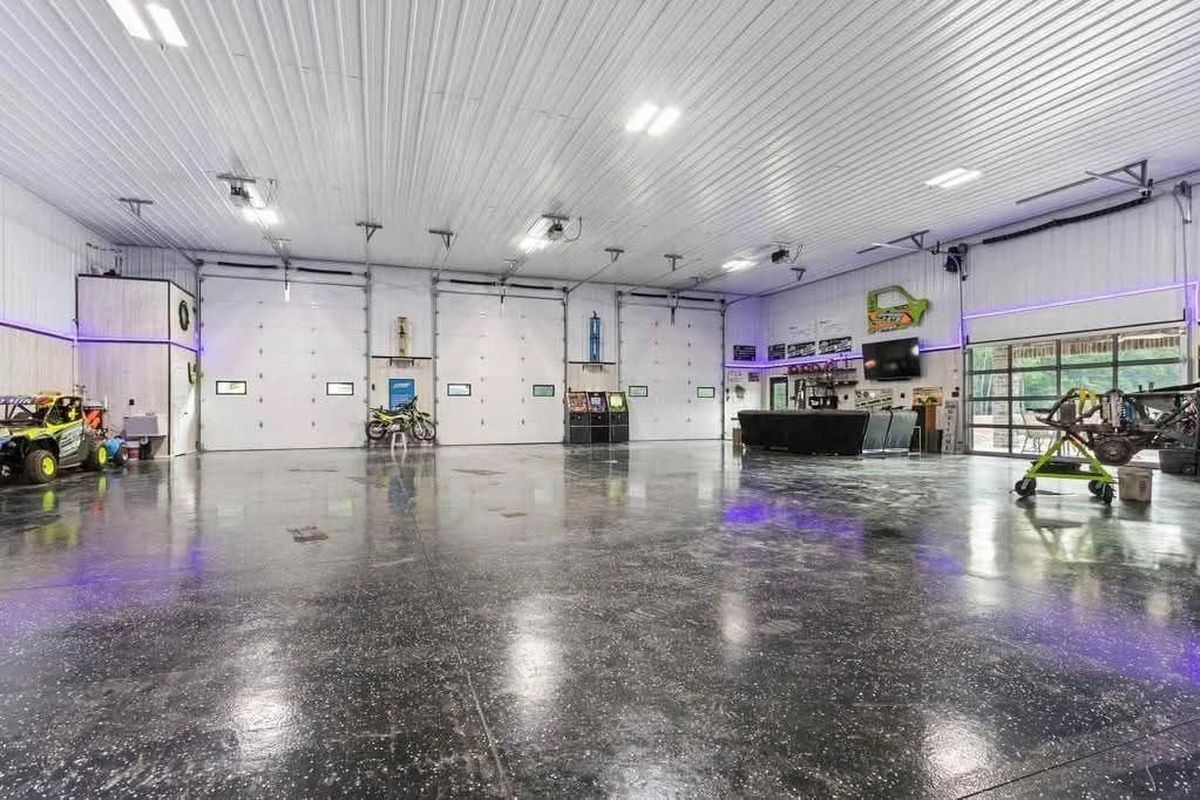
The photo is an example finish, not a documented Alpharetta job.
A wide garage slab gives the installer a large, connected surface to evaluate, not just a place to spread coating. Oil spots, old sealers, patching, and weak concrete can affect adhesion in different areas. A sound-looking surface is not proof that a coating will bond. Ask how the crew will check the slab and what they will do if test areas reveal contamination or a weak surface.
Moisture should be measured before a coating system is selected. Calcium chloride testing estimates moisture vapor emission at the surface; in-slab relative humidity testing measures conditions inside the concrete. They are different tests, and neither guarantees success by itself. Ask which method fits the proposed system, whether results meet its stated limits, and whether the readings and test locations will be documented.
Diamond grinding removes surface material and opens concrete to a consistent profile; the required texture is often described by a concrete surface profile, or CSP, range. Acid etching is not an equal substitute for mechanical preparation: it may leave residue or fail to remove coatings and weak concrete. Cracks and control joints also need separate decisions. A rigid coating should not be expected to stop a joint that moves.
For a garage quote, compare the preparation and coating steps, not just the finish name. The written scope should identify grinding, crack treatment, any primer, the base coat, flake broadcast if specified, and the topcoat. It should also explain how edges, steps, and joints will be handled. Ask what changes if the slab has old sealer, deeper damage, or moisture readings outside the system’s limits.
A conditioned bonus room above a garage has different priorities from a parking bay. Sunlight through windows can make an epoxy finish amber over time, so ask whether the selected topcoat is UV-stable and what appearance changes to expect. In a working garage, resistance to hot-tire pickup and routine vehicle use matters too. The resin layers and topcoat should be chosen as one compatible system, not mixed by appearance alone.
Ask for the temperature and humidity limits, cure time before foot traffic and vehicle traffic, and the recoat window between layers. Those details affect scheduling and adhesion. If a recoat window is missed, the installer may need additional surface preparation before applying the next layer. Keep the garage available for the full stated cure period; early parking can mark or damage a floor that feels dry to the touch.
A simple water-drop check can suggest that the surface repels water, but it cannot identify the material or prove the coating will fail. Ask the installer to test the surface and include removal of any incompatible sealer in the preparation plan. Grinding a small test area can help reveal what is on the concrete.
A coating can make repaired cracks less noticeable, but it cannot prevent a moving crack from reopening. The installer should distinguish stable cracks from cracks that move or reflect a control joint, then explain the repair material and likely appearance. Expect some repaired lines to remain visible under a solid or flake finish.
Slip resistance depends on the texture, topcoat, and amount of aggregate, as well as what gets tracked onto the floor. Ask to see a sample with the proposed texture and discuss cleaning effort alongside traction. A very smooth finish may be easier to wipe down but can feel slick when wet.
Use the installer’s vehicle-traffic cure time, not the point when the surface first feels dry. Cure depends on the coating system and the conditions during installation. Ask for separate times for walking, moving storage back, and parking, and get the instructions in writing before the crew begins.
Sweep grit and rinse away soil before it is ground into the finish. Use a mild cleaner approved for the coating, then rinse rather than leaving a film. Avoid harsh solvents and abrasive pads unless the system’s care instructions allow them. Ask how to handle oil or other spills promptly without damaging the topcoat.
Tell us about the floor in Alpharetta. A photo and a rough size are enough to start a written estimate. No street address on our side — local pros come to the slab.
Atlanta Epoxy Floors is an independent referral service that connects you with local epoxy flooring pros.
 ATLANTA